
Silver Run Tackle
Salmon Fishing Techniques: Casting, Drifting, Float Fishing & More
A practical guide to river salmon methods—casting lures, drift fishing, float fishing, plunking, back bouncing, boat drifts, and how flossing differs from legal hook-and-line fishing.
River salmon do not feed the way trout do. Once they enter freshwater, most techniques work by putting flash, vibration, scent, or a natural drift into the lanes where fish travel — not by matching a hatch. The method that works depends on current, depth, whether you are on the bank or in a boat, and what your state allows. This guide covers the main river techniques — casting lures, drift fishing, float fishing, plunking, back bouncing, boat drifts, and what “flossing” actually means — so you can pick the right approach and stay legal.
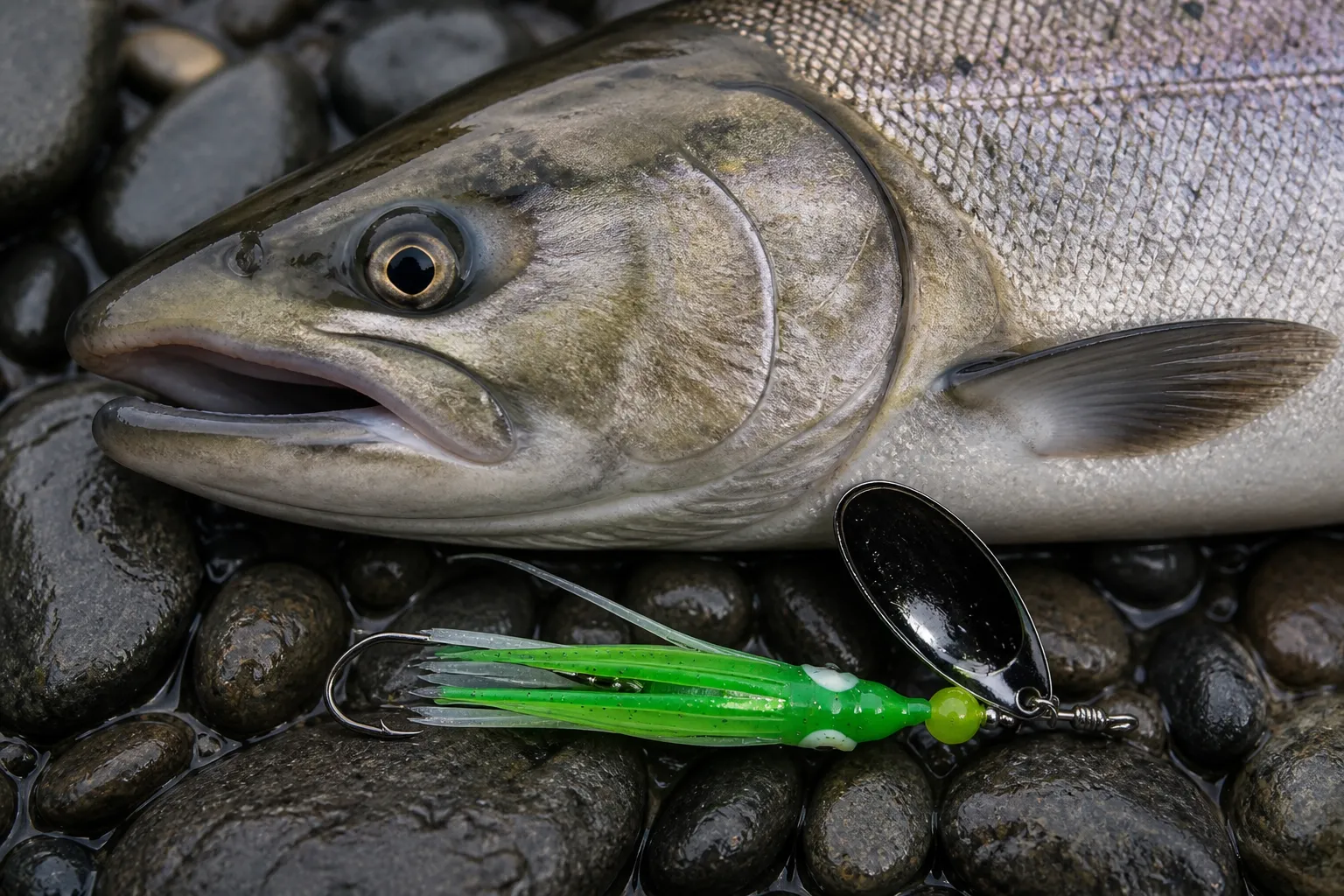
Table of Contents
Choosing a Technique
Start with the water in front of you, then pick a method that keeps your offering in the strike zone without constant snags or illegal hooking. Use this as a quick filter, then dig into the sections below.
| Situation | Start with |
|---|---|
| Heavy current, covering bank water | Casting hardware (spinners, spoons) |
| Working a run along the bottom | Drift fishing / bottom bouncing |
| Need precise depth or a snaggy bottom | Float / bobber with bait or jig |
| Known travel lane, waiting for fish | Plunking |
| Deep, fast hole | Back bouncing |
| Covering long stretches by boat | Side drifting |
| Lower river / tidewater | Trolling |
Reading Conditions
Clarity and flow change which methods stay productive. High, dirty water often pushes fish to soft edges and travel lanes — plunking or heavier hardware holds a lane while scent or flash does the work. Low, clear water favors floats, lighter leaders, and quieter presentations.
Bank anglers lean on hardware and drift fishing. Boats unlock side drifting, back bouncing deep slots, and trolling lower river or tidewater. Stick with one method on a spot long enough to know why it failed — wrong depth, wrong speed, or empty water — before you swap systems.
When to Switch Methods
- Constant snags on bouncing lead → try a float set just off bottom
- Fish pushing past a fixed lane and ignoring casts → plant a plunk and wait
- Free drifts will not hold in a deep, fast hole → back bounce
- You can cover a half-mile of holding water by boat → side drift
- Crowded combat water → fish where you stand; keep casts in your lane
Casting Lures
Casting spinners, spoons, and plugs is one of the most direct ways to cover seams and pocket water from the bank. Hardware triggers aggression and instinct with flash and vibration when fish are not feeding on bait.
How to Present Hardware
Quarter upstream, let the lure sink, then retrieve or swing so the action stays honest near the bottom. Count the sink on the first few casts until you feel bottom or the blade starts working at the depth you want. In strong current the water helps turn a spinner blade; in softer water you may need a slightly faster retrieve. Keep light contact — you should feel a steady thump or wobble through the rod.
Work structure in lanes, not random casts across the river. Soft edges beside faster water, outside bends, and slots behind rocks deserve thorough coverage. Cast, swing or retrieve through the zone, step a few feet, and repeat so each pass covers new water.
Spinner, Spoon, and Plug Roles
- Inline spinners — flash plus vibration; heavier bodies (around 1 oz) hold depth better in big current and stay useful when you need to cover bank water quickly
- Spoons — swing or retrieve thin blades through seams; lighter setups also plunk well in moderate current when you want flash without a full bait program
- Plugs — Kwikfish- and Flatfish-style lures for slower or deeper water; often wrapped with bait when scent matters as much as wobble
A common bank setup for Chinook is a medium-heavy spinning rod, 20–30 lb braid with a 15–25 lb leader, and a heavy inline spinner. For Sacramento River access and spinner presentation detail, see our Sacramento Chinook guide. Spinners built for moving water — including the SRT 1 oz Inline Spinner — are one option when lighter lures ride too high.
Common Casting Mistakes
- Lure too light for the current — rides high and never reaches holding fish
- Retrieve too fast — blade spins but the lure races past before a fish commits
- Casting the middle of featureless water instead of seams, edges, and slots
- Changing colors every few casts instead of fixing depth and speed first
Drift Fishing and Bottom Bouncing
Drift fishing is the classic river presentation: cast upstream, let a weighted rig bounce along the bottom at roughly current speed, then reel up and repeat. Per WDFW’s freshwater salmon guide, the goal is bottom contact every foot or so while you work the run systematically.
The Drift Rig
A standard setup uses a snap swivel at the end of the mainline, pencil lead in a short piece of rubber tubing or a slinky weight on the snap, and a 12–48" leader to a single egg-loop hook. Seat pencil lead only a short way into the tubing so a hung weight can pull free instead of breaking the whole rig. Above the hook, add a corky and yarn, a winged bobber or other drift bobber, or fish bait alone. Salmon roe and sand shrimp are the most common additions; scent helps on pressured water.
Typical gear is an 8½- or 9-foot rod rated for 15–30 lb line, spinning or baitcasting. Chinook often call for 20–25 lb mainline; smaller salmon can fish lighter.
Weight Dialing
Weight controls drift speed as much as depth. More weight slows the bait; less weight lets it race downstream. You want the sinker to tick bottom about every foot at current speed — not drag like an anchor, and not swing freely with no bottom contact. Carry a range of pencil lengths or slinkies and change quickly when the run’s pace changes. If you never feel ticks, add weight. If you hang every cast, drop a size.
Working a Run
Work near shore to far shore, and from the head of the run (just below the riffle) toward the tail. Cast upstream at about 30–45° and follow the drift until you are 30–45° downstream, then reel and repeat. Under crowded conditions you may have to stand your ground and fish the water in front of you without marching the whole run.
Bottom Bounce vs Drift
Bottom bouncing is the same idea at closer range — pocket water, smaller pools, shorter casts. Drift fishing usually means longer casts and bigger or deeper water. Casting reels help on the swing because you can free-spool line to keep the weight ticking instead of lifting off bottom as the lure quarters across.
Bite vs Rock
Bite detection takes practice. A rock tick feels abrupt and dead; a fish often softens the rod tip, stops the drift, or pulls with life. Most takes come later in the drift, when the offering slows and quarters across the fish rather than racing straight at its nose — fish have a blind spot dead ahead, so a swinging presentation is easier to see and grab.
Float Fishing
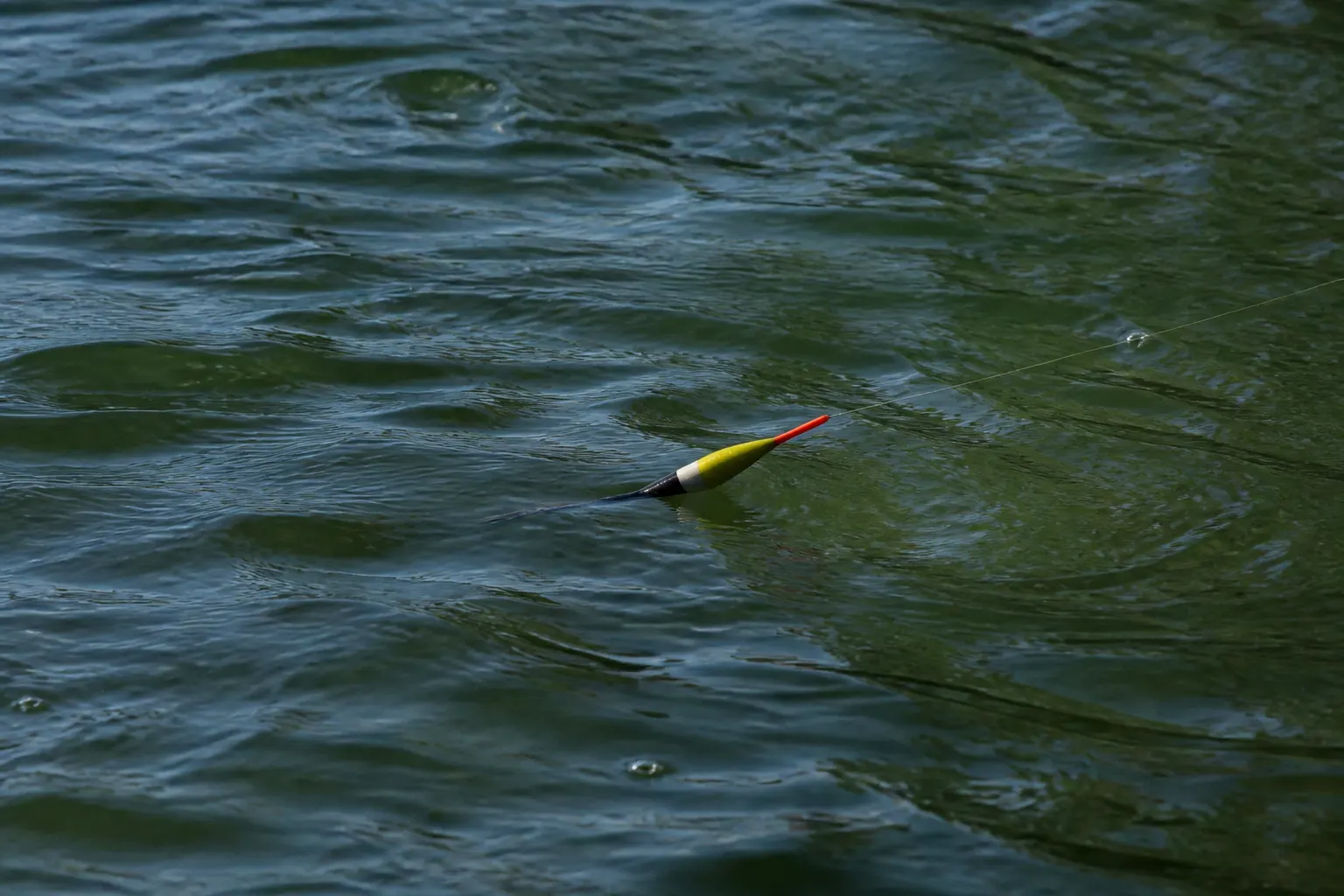
Float (bobber) fishing suspends bait or a jig at a set depth for a drag-free drift. It shines when you need precise depth control, when the bottom is too snaggy for constant bouncing, or when water is slow enough that a float tracks cleanly.
Float Rig Order
A typical slip-float rig, top to bottom: bobber stop, small bead, sliding float, weight to pull line through the float, swivel, then a short leader (often 12–24") to eggs, eggs with sand shrimp, or a marabou jig. The stop can be reeled through the guides for easier casting. Longer rods — often 9'6"–12' — give better line control on big drifts.
Setting Depth
Find bottom by sliding the stop deeper until the rig occasionally scrapes, then fish about a foot shallower so bait rides just off the bed. Per WDFW, early morning fish may suspend; once sun hits the water, salmon usually hug bottom and you should fish within a foot of it. Recheck depth whenever you move to a new seam or the river stage changes.
Speed and Mending
A float dragged by surface current races bait past fish unnaturally. Mend by lifting or flipping line so any belly comes out and the path from rod tip to float is straight. Floating braid (or Spectra-style line) mends easily and its low stretch helps the hookset when the float goes down. Keep the float drifting at the pace of the water that holds fish — not the faster surface skim.
When Floats Beat Lead
Choose a float when bouncing lead hangs constantly, when you need exact depth in a slot, or in slower eddies and soft runs where a bobber tracks cleanly. Eggs remain the top bait choice; sand shrimp pair well for Chinook; marabou jigs shine in low, clear water and on pinks. Cover water in lanes — top of the spot first, then step across in small increments — the same way you would with a careful drift.
Plunking
Plunking parks scent or an active lure in a migration lane and waits. Use enough weight to hold bottom, then leave the rod in a holder until a fish finds the offering. It works from shore or an anchored boat and is especially useful in high or dirty water when fish hug edges and travel lanes.
Plunk Setup
The rig resembles a drift setup, but the weight anchors instead of bouncing. A slider or swivel lets a dropper carry the sinker while a longer leader presents a winged bobber, spoon, or plug that still works in current. Heavier rods and stronger mainline are common on big rivers where you may park 1–8 oz of lead and wait.
Kwikfish-Style Plunk
A Columbia River classic is a Kwikfish wrapped with a thin sardine or fish fillet. WDFW notes sizes around K13–K16 for many salmon anglers — larger plugs in slower water, smaller in faster water. Tune the screw eye so the plug tracks straight when you pull it upstream: left dive → turn clockwise; right dive → turn counterclockwise. Back the lure downstream until the weight is planted and the plug still wobbles. Put the rod in a holder and wait — let the fish pull the rod down toward the water several times before you fight it, rather than yanking on the first bump.
Where to Plant
Spot selection beats constant casting. On larger rivers, inside bends force migrants around a point. In smaller water, look for tailouts just above riffles where fish rest after climbing. At low flows stay near the main current; at high flows work the soft edges. Upstream salmon look for the easiest safe path — depth, wood, boulder seams, or a bubble curtain can all concentrate fish into a lane worth parking in.
Back Bouncing
Back bouncing pins a bait or plug on the bottom with heavy weight, then uses short lifts or controlled line feeds to tick the presentation through a deep hole. It is a precision method for fast, deep water where a free drift will not hold.
When Back Bounce Wins
Use it in deep holes, drop-offs, ledges, and slots below faster water — often walking-speed current or faster, commonly in the 9–20 ft range when available. Chinook often hold deeper than steelhead; back bouncing keeps bait or a plug in that zone long enough for a fish to commit.
Traditional Lift-and-Drop
Drop enough weight that the sinker holds until you lift. A short lift hops the rig a few feet; settle and wait for the rod tip to pulse from current on the plug or bait, then hop again. Eggs, shrimp, or plugs (Kwikfish, Flatfish, Mag Lip–style) all work. You want a solid thump on bottom without the whole rig skating away on its own.
Go-Big Crawl
In slower deep water, heavy traditional bounce can feel dead. A “go big” approach uses less weight and a large plug so current slowly crawls the rig downstream. Feed roughly 10 feet of line, stop, wait for the tip to pulse, hold briefly, then feed another short length. Repeat until you run out of productive water or the current will no longer pull line. Baitcasters make feathering line easier; a sturdy spinning outfit can work if you manage the spool carefully.
Boat vs Bank
Back bouncing is at its best from a boat — anchored on a hole or slowly slipping while you work the slot. From the bank or a cut bank you can cover a limited arc before the angle lifts the gear or stalls the crawl; when control is gone, reel up and start over. Anchored back bounce also works when you expect fish to move through a known lane and come to you.
Side Drifting and Trolling
Side Drifting
Side drifting matches boat speed to the current while you present bait out the side of the boat. Because you are not fighting current the way a bank drifter does, you can often downsize weights and feel takes more clearly. Roe rigs with a floating corky or bead between hooks keep bait off the bottom. Long drifts cover a lot of holding water in medium to high flows.
Keep a semi-tight line so you feel a pull or hang. A soft lift usually tells rock from fish — set hard when the pull has life. On shared water, give other boats room. Bobber-and-bait hybrids (bobber dogging) add a float for visual bite detection while the boat still moves with the river.
Trolling
Freshwater trolling fits lower big rivers and tidewater, where boat speed and current present herring, spinners, plugs, or bait harnesses at depth. A common setup is a three-way swivel: mainline in, a lighter dropper to the weight (so a snag breaks the dropper first), and a longer leader to the bait or lure. Weights, divers, or downriggers get the offering down; Chinook setups often stay near bottom, while coho may run higher. In-line flashers ahead of herring are popular. Check local seasons and gear rules — WDFW’s freshwater salmon page covers three-way and flasher layouts.
Flossing: What It Is and Is Not
Flossing (sometimes called lining) is a presentation where a long leader drifts so line can pass through the open mouth of a salmon swimming upstream, and the angler sets on tension. It is most associated with dense sockeye and combat fisheries where fish stack and mouths stay open. It is controversial because many hookups are not voluntary bites.
It is not the same as classic snagging with short leaders and weighted trebles yanked through a school — but regulators often treat intentional lining harshly, and foul-hooked fish are usually illegal to keep.
In California, Title 14 CCR §2.00 prohibits snagging and makes it unlawful to kill or retain any fish that has not voluntarily taken the bait or artificial lure inside its mouth. Fish hooked elsewhere must be released immediately. That standard makes flossing a poor fit for California anglers; focus on methods that present a lure or bait for a real take. Elsewhere, rules vary by water — check the current pamphlet for leader length, hook type, and snagging definitions before you fish.
Some “drift” fish are accidental flosses. Learning to get a bite with hardware, floats, or properly drifted bait is the more reliable long-term skill — and the one that stays clean with the regs.
Gear Across Techniques
You do not need a different outfit for every method, but rod length, line, and weight style should match how you fish. More detail on line and hooks lives in our fishing line guide and hook guide.
| Method | Rod tendency | Mainline tendency | Weight style |
|---|---|---|---|
| Casting hardware | 7½–9' MH spinning or casting | 20–30 lb braid + leader, or 15–25 lb mono | Built into lure (e.g. 1 oz spinner) |
| Drift / bottom bounce | 8½–10' MH–XH | 20–25 lb for Chinook; braid or mono | Pencil lead or slinky |
| Float fishing | 9'6"–12' for line control | Floating braid for mend and set | Sliding egg / shot under float |
| Plunking | Extra-heavy 8½–9'+ | Heavier mono or braid (big-river setups often 40–60 lb) | Pyramid / slider dropper |
| Back bouncing | Stout casting preferred | Strong braid or mono; smooth drag | Heavy hold or lighter “go big” |
| Side drifting | 9–12' medium–MH | Often mono for stretch and feel | Light enough to tick, not anchor |
| Trolling | Standard salmon rod OK | 20–25 lb+; lighter dropper to weight | 2–8 oz common; divers / downriggers optional |
Match weight to current so you stay in contact without constant hang-ups. Too light and you leave the strike zone; too heavy and you snag or look unnatural. Octopus and egg-loop hooks cover most bait work; matched singles or trebles ride plugs and spinners.
Official Sources
- WDFW — Freshwater salmon fishing (drift, plunk, float, troll basics)
- California CCR Title 14 §2.00 — fishing methods and snagging ban
- CDFW 2026 Freshwater Sport Fishing booklet
Seasons, bag limits, and gear rules change by water and year. Verify with the agency that manages the water you fish before you go. For California Central Valley dates and limits, use Sacramento Salmon Fishing 2026 and confirm with CDFW.
Common Questions
What is the difference between drift fishing and flossing?
Drift fishing presents bait or a lure along the bottom so a fish can take it. Flossing aims to thread line through an open mouth and set on contact. The rigs can look similar; the intent and legality are not.
Is flossing legal in California?
California law requires that retained fish voluntarily take the bait or lure in the mouth, and snagging is prohibited. Flossing does not fit that standard well. Release foul-hooked fish immediately and use bite-oriented methods instead.
What is the best technique for bank fishing heavy current?
Casting a heavy spinner or spoon through seams is often the simplest productive approach. Drift fishing also works if you can manage weight and bottom contact from your spot.
When should I float fish instead of drifting?
Use a float when you need exact depth, the bottom is snaggy, or a drag-free bait presentation outperforms bouncing lead. Drift when you want continuous bottom contact through a longer run.
How much weight should I use for drifting?
Use just enough for the sinker to tick bottom about every foot at current speed. More weight slows the drift; less lets it race. If you never feel ticks, add weight. If you hang constantly, drop a size.
What lure weight works in strong river current?
Many Chinook bank anglers start around 1 oz for inline spinners so the lure holds depth. Go heavier if you ride high; lighter only if you can keep the blade working near the fish.
Do river salmon still bite, or only get lined?
They do bite — especially on hardware, plugs, and well-presented bait — even when they are not feeding like trout. Lining happens in crowded fisheries, but bite-focused angling is both legal and highly effective.
If casting hardware is your main river method, a 1 oz inline spinner built for current is a straightforward place to start. Browse colors and options in the shop.