
Silver Run Tackle
Fishing Hook Guide for Pacific Northwest Rivers
Hook types, sizes, and quality checks that help you land more salmon in heavy current.
You've probably lost more salmon to the wrong fishing hook than to any mistake you made on the water. Most anglers fishing the Cowlitz, Skagit, or Columbia focus on their technique and lure selection, but the hook itself determines whether that aggressive strike turns into a landed fish or another story about the one that got away. Understanding which fishing hook to use in heavy current and when to switch sizes for different salmon species can be the difference between a frustrating day and filling your cooler.
Table of Contents
- Hook Anatomy and Terminology Every River Angler Should Know
- Common Hook Types for Pacific Northwest Salmon
- Decoding Hook Sizes for Different Salmon Species
- Matching Hooks to River Conditions and Techniques
- How Hook Quality Impacts Your Success Rate
- Setting Yourself Up for Success on the River
- Common Questions About Fishing Hooks
Hook Anatomy and Terminology Every River Angler Should Know
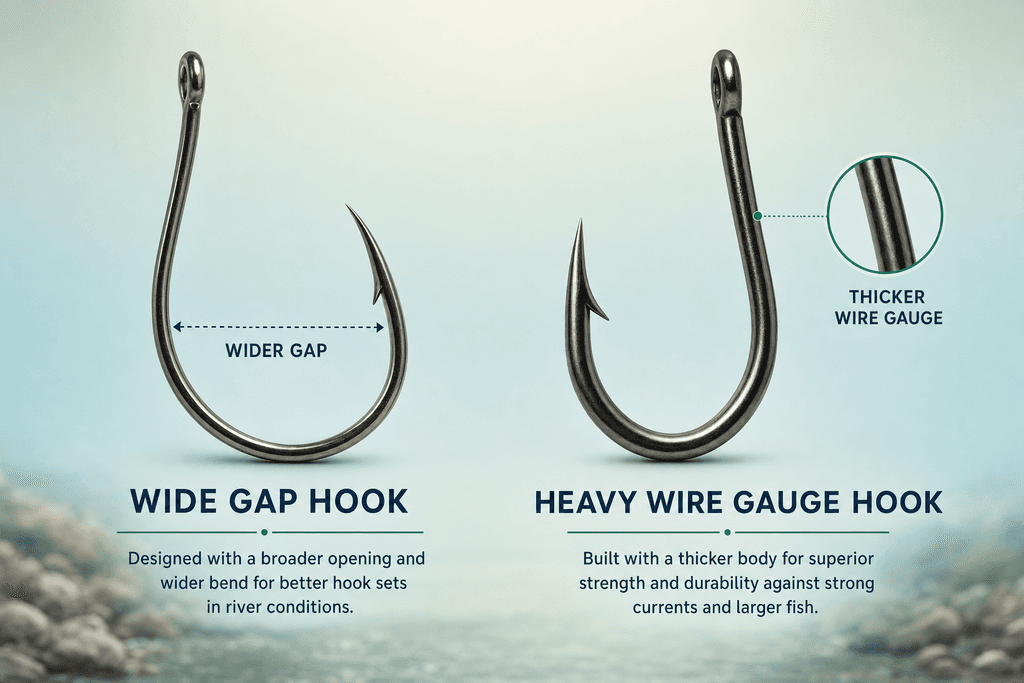
A fishing hook might look simple at first glance, but each part plays a specific role in whether you land that salmon or watch it swim away. Understanding hook anatomy helps you pick the right hook for river conditions and know exactly what tackle shop employees mean when they start throwing around terms like "wide gap" or "heavy wire gauge." The difference between a bent hook and a landed fish often comes down to knowing which parts matter most for your fishing situation. Most anglers learn this stuff the hard way, but you don't have to.
The Six Main Parts of Every Fishing Hook
Every fishing hook breaks down into six basic parts, and each one affects how the hook performs in heavy current. The point is where the hook penetrates the fish's mouth, and a sharp point means better hooksets in fast water where you need quick penetration. The barb sits just behind the point and keeps the fish from shaking free, though some anglers pinch them down for easier releases.
The bend forms the curved section of the hook and determines how much pressure it can handle before straightening out. A hook's shank runs from the bend to the eye and affects how deep the hook sits in a fish's mouth. The eye is where you tie your line, and it comes in different styles depending on how you want to attach it. Finally, the gap measures the distance between the point and the shank, which controls how well the hook grabs onto a fish's jaw.
| Hook Part | Primary Function | River Fishing Impact |
|---|---|---|
| Point | Penetrates fish mouth | Must stay sharp in rocks |
| Barb | Prevents hook escape | Holds in strong current |
| Bend | Provides strength | Resists big fish pressure |
| Shank | Connects eye to bend | Length affects bait presentation |
| Eye | Attaches to line | Style affects knot strength |
| Gap | Determines bite area | Wider gaps for thick-jawed salmon |
Wire Gauge Matters More Than You Think
The thickness of the wire used to make a fishing hook determines whether it bends, breaks, or holds strong against a fighting salmon. Heavy wire gauge hooks work best for big chinook and coho because they won't straighten out under serious pressure. Light wire hooks penetrate easier but might not hold up in rocky river bottoms where our SRT Salmon Spinner often gets worked through heavy structure.
Here's what different wire gauges mean for your fishing:
- Heavy wire handles big fish and rough conditions but needs more force to set
- Standard wire balances strength and penetration for most river salmon fishing
- Light wire sets easier in soft mouths but bends under heavy loads
- Extra-heavy wire for fishing around rocks and logs where hooks take a beating
Common Terms You Will Hear at the Tackle Shop
Walk into any tackle shop and you'll hear anglers talking about hook specifications using shorthand terms that sound like a foreign language. Getting familiar with this terminology helps you make better decisions and communicate what you need. Understanding hook specifications becomes second nature once you know the basic vocabulary.
Key terms every river angler should know:
- Offset hooks have points that angle away from the shank for better hooksets
- Straight eye, turned-up eye, and turned-down eye describe how the eye connects
- Forged hooks go through extra strengthening during manufacturing
- Chemically sharpened points stay sharper longer than mechanically ground points
Common Hook Types for Pacific Northwest Salmon
Most salmon anglers lose more fish to poor hook selection than they'd like to admit. The type of fishing hook you choose can mean the difference between landing that 30-pound Chinook or watching it throw your lure mid-fight. Each hook style serves a specific purpose, and understanding when to use which type will put more fish in your net. The Pacific Northwest has unique river conditions that demand specific hook choices, especially when you're dealing with heavy current and aggressive salmon. What works in a slow pool won't necessarily hold up when you're fishing the main channel of the Cowlitz or Skagit.
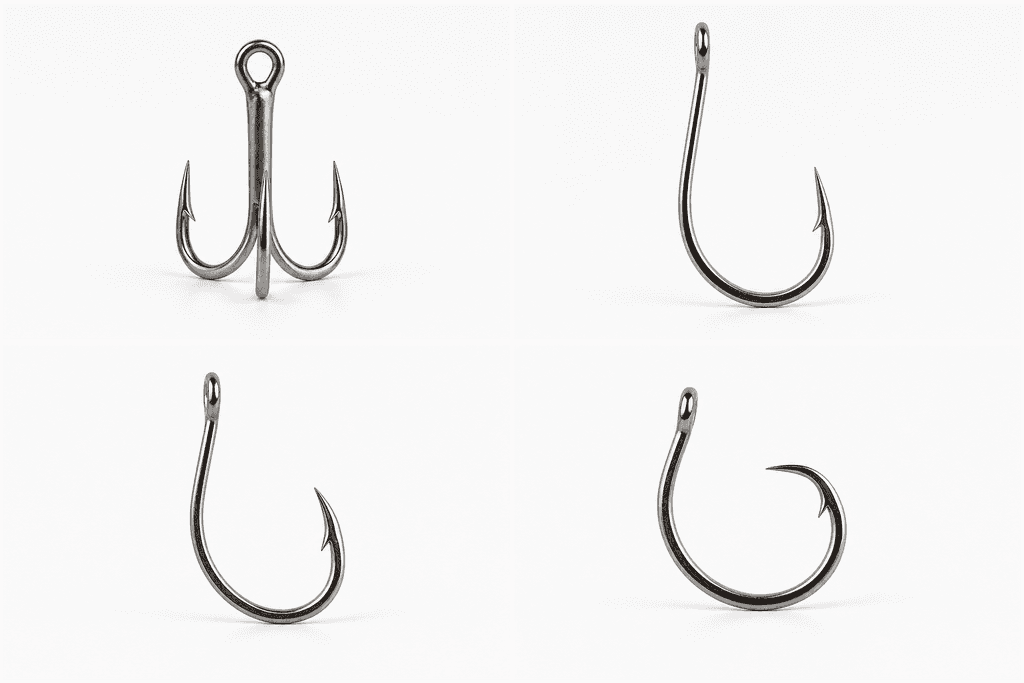
Treble hooks remain the go-to choice for spinners and spoons in fast water because they offer multiple hook points that increase your chances of a solid connection. When a salmon strikes in heavy current, you need that instant hookset, and trebles deliver. The SRT Salmon Spinner uses quality treble hooks specifically because they perform reliably in the challenging conditions where salmon hold.
- Single siwash hooks provide better hooksets and make catch-and-release much easier on the fish
- Octopus hooks work best for bait fishing in slower pools and back eddies
- Circle hooks are ideal when you're focused on conservation and want to minimize fish mortality
- Always check local regulations, as many Northwest rivers require barbless hooks
The barbless requirement isn't just about following rules. It actually helps you land more fish because barbless hooks penetrate faster and deeper. You'll need to keep constant tension on your line, but that's good practice anyway when you're fighting salmon in current.
| Hook Type | Best Use | Water Conditions |
|---|---|---|
| Treble | Spinners, spoons | Fast current |
| Single Siwash | Lures, easy release | All conditions |
| Octopus | Bait fishing | Slow pools |
| Circle | Bait, conservation | Moderate flow |
Decoding Hook Sizes for Different Salmon Species
The hook sizing system confuses a lot of anglers because it seems backwards at first. For most hook styles, larger numbers actually mean smaller hooks, so a size 6 is bigger than a size 10. Once you get into the "aught" sizes (written as /0), the system flips and larger numbers mean bigger hooks. A 2/0 is smaller than a 4/0. This matters more than you might think when you're trying to match your presentation to the fish you're targeting.
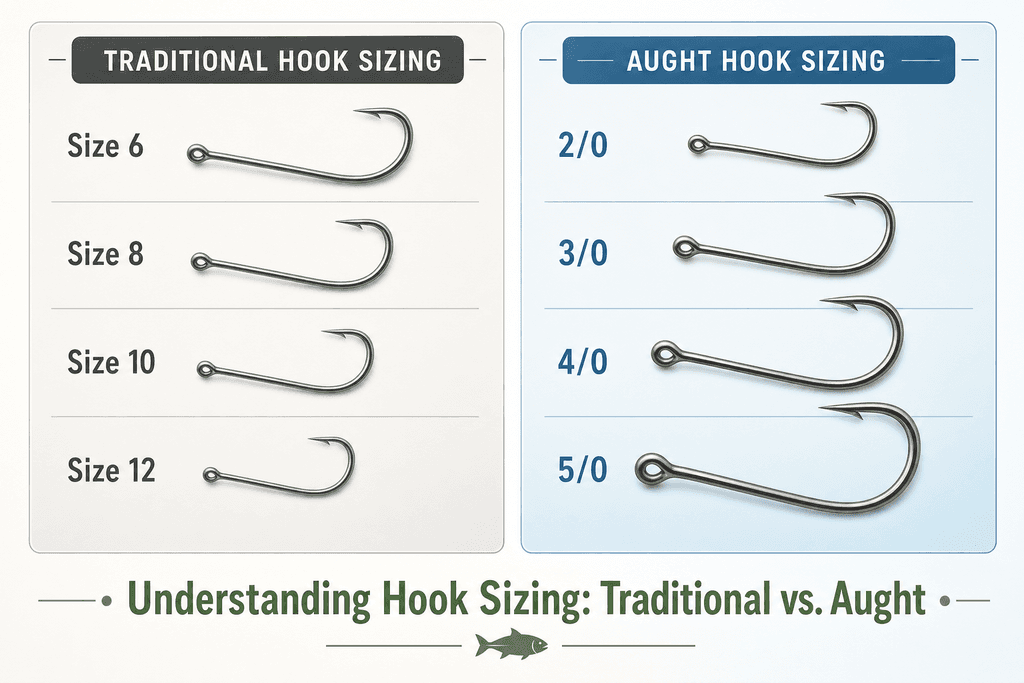
Chinook in heavy current demand size 2 to 2/0 hooks because these fish have hard mouths and the current adds force to their runs. You need a hook with enough gap width to penetrate and hold. Coho and Sockeye typically run smaller, so you can drop down to size 4 or 6 hooks in most situations.
Water clarity changes everything though. When the river's running clear and low, those same Chinook that would hammer a 2/0 hook in high water become incredibly selective. Gap width matters more than overall hook size when you're fishing fast water because you need penetration power. A wide gap hook in a smaller size often outperforms a narrow gap hook that's technically larger.
| Species | Heavy Current | Moderate Flow | Low/Clear Water |
|---|---|---|---|
| Chinook | 2 to 2/0 | 4 to 1/0 | 4 to 6 |
| Coho | 4 to 1 | 6 to 4 | 6 to 8 |
| Sockeye | 6 to 4 | 8 to 6 | 8 to 10 |
Your lure size should dictate your hook size to some degree. A 1 oz spinner like the SRT needs a hook that balances properly and doesn't interfere with blade rotation. Too large and you'll kill the action, too small and you'll lose fish on the hookset. Understanding the complete hook sizing system helps you make better choices across different fishing situations.
Matching Hooks to River Conditions and Techniques
River conditions change by the hour during salmon season, and your hook selection needs to adapt just as quickly. Heavy current situations require strong, chemically sharpened hooks that won't bend out or lose their point after bouncing off rocks. The force of a salmon's run multiplies in fast water, putting incredible stress on your terminal tackle. Cheap hooks will cost you fish, plain and simple.
When the river drops and clears up, those same aggressive fish become cautious. Smaller, lighter wire hooks present more naturally and spook fewer fish in low water conditions. You're trading some strength for stealth, but that's the right call when salmon are holding in clear pools and inspecting everything that drifts past.
- Rocky bottoms demand snag-resistant hook designs with protected points
- Drift fishing works best with octopus or circle hooks in sizes 2 to 2/0
- Spinner fishing requires trebles that won't interfere with blade rotation
- Back-bouncing needs heavy wire hooks that maintain their shape
- Side-drifting performs better with wide gap hooks for better hooksets
Inline spinners perform differently than other lures because they create constant vibration and flash. The SRT Salmon Spinner stays in the strike zone even in heavy current, but only if the hook is properly sized and sharp enough to penetrate on that aggressive strike. Different fishing hook types each have specific applications that match certain techniques better than others.
The technique you're using matters as much as the conditions. Active presentations like spinner fishing need hooks that set themselves on the strike, while passive techniques like bait fishing give you time to set the hook manually. Match your hook style to how you're fishing, not just what you're fishing for.
How Hook Quality Impacts Your Success Rate
Most anglers lose more fish to poor hook quality than they realize. When you feel that tap and set the hook, only to have the fish throw it seconds later, the problem usually isn't your technique. The difference between landing a trophy salmon and watching it swim away often comes down to whether your fishing hook can penetrate quickly and hold under pressure. Premium hooks cost more upfront, but they actually save money by reducing lost fish and lasting through multiple seasons without dulling or corroding.
Chemically Sharpened vs Standard Hooks
The sharpening process makes a huge difference in hookup rates. Standard hooks get their points from mechanical grinding, which leaves microscopic burrs and inconsistencies. Chemically sharpened hooks go through an acid bath that removes metal at the molecular level, creating a needle-sharp point that penetrates with minimal pressure.
- Chemically sharpened points penetrate with noticeably less force than standard hooks
- The ultra-fine point catches flesh on light strikes that standard hooks miss
- Premium hooks tend to hold their edge longer during active fishing
- Hand-assembled tackle like our SRT Salmon Spinners uses only chemically sharpened hooks for maximum reliability
Material Quality and Corrosion Resistance
Cheap hooks start rusting after a single trip to saltwater estuaries where salmon stage before their spawning runs. High-carbon steel hooks with proper coatings resist corrosion and maintain their strength even after repeated exposure to salt water. Budget hooks from discount retailers might save a few dollars, but they'll fail when you hook into a 30-pound king.
| Hook Feature | Premium Quality | Budget Quality |
|---|---|---|
| Sharpening Method | Chemical process | Mechanical grinding |
| Corrosion Resistance | Multi-layer coating | Basic plating |
| Point Retention | Full season | Few trips |
| Hookup Consistency | More reliable under pressure | More missed or thrown fish |
When to Replace Hooks on Your Tackle
Even premium hooks need replacement eventually. The thumbnail test works well for checking sharpness - drag the hook point across your thumbnail at a 45-degree angle. If it catches and digs in slightly, it's sharp enough. If it slides without catching, it needs replacing or sharpening.
- Replace hooks after 8-10 fishing trips in rocky rivers
- Check for rust spots or discoloration after each saltwater session
- Inspect hook points before every trip using the thumbnail test
- Replace immediately if the point is bent or rolled over
The Department of Marine Resources offers guidance on hook maintenance that applies to all hook styles. Testing your hooks takes 30 seconds but prevents hours of frustration on the water when fish after fish throws your lure.
The Real Cost of Cheap Hooks
Budget hooks seem like a bargain until you calculate lost fish. If cheap hooks cost you even two salmon per season that premium hooks would have landed, you've lost way more in fishing time and potential catches than you saved. Serious salmon anglers know that hook quality directly correlates with fish in the net, not just strikes on the line.
- Premium hooks cost more upfront but tend to land more of the fish you hook
- Budget hooks usually need replacing more often
- Lost fish represent wasted time, gas, and fishing opportunities
Setting Yourself Up for Success on the River
Picking the right fishing hook isn't something you should rush through at the tackle shop. The hook type needs to match your technique, whether you're drifting bait through deep holes or swinging lures in fast current. Size matters too, and going too big or too small can mean the difference between a solid hookup and watching that chrome salmon roll away. Most anglers who fish the rivers up here know that a sharp, quality hook is worth every penny when you finally get that take you've been waiting for.
Here's what really makes a difference on the water:
- Match your hook type to your fishing method - octopus hooks for bait, trebles for spinners and spoons, siwash when you want an easier release
- Choose the right size for salmon - usually size 6 to 2/0 depending on species and conditions
- Check sharpness before every trip - dull hooks lose more fish than anything else
- Keep notes on what works - water conditions change and so should your approach
The hook is just one piece of your setup, but it's the piece that actually connects you to the fish. When you're running something like our SRT Salmon Spinner through heavy current, you want hooks that can handle the pressure and set clean. Quality tackle works together as a system.
Some anglers spend years figuring out these details through trial and error. Others pick up patterns faster by paying attention to what actually produces hookups versus what just looks good in the water.
Common Questions About Fishing Hooks
Pacific Northwest salmon anglers deal with some of the toughest fishing conditions anywhere, and that means having the right fishing hook setup matters more than most people think. Whether you're working heavy current rivers or trying to land a big chinook without harming it, the details make all the difference. These are the questions we hear most often from anglers fishing our local waters.
Should I use barbless hooks even when not required?
Yes, and most experienced salmon anglers have already made the switch. Barbless hooks cause less damage to fish, make releases faster and safer, and honestly don't result in more lost fish if you keep steady pressure on your line. They also come out of your hand or waders a lot easier when accidents happen, which they will.
How often should I replace hooks on my lures?
Check your fishing hook after every few fish or whenever you snag bottom. If the point won't dig into your thumbnail with light pressure, it's time for a new one. A dull hook will cost you more fish than almost any other equipment failure, so don't get cheap here. Our SRT Salmon Spinners come with quality hooks right out of the package, but even those need inspection after hard use.
What's the best hook for catch and release salmon fishing?
Single barbless hooks in the 1/0 to 3/0 range work best for catch and release. They penetrate quickly, hold well with proper tension, and remove cleanly without tearing tissue. Avoid treble hooks if you're planning to release your fish, since they cause more damage and take longer to remove when a salmon is thrashing.
Can I sharpen hooks or should I replace them?
You can sharpen hooks a few times, but replacement is usually smarter. A small hook file works fine for touching up a slightly dulled point, but once a hook has hit rocks multiple times or shows any rust or weakness, toss it. Hooks are the cheapest part of your setup, so trying to save two bucks on a worn-out hook makes no sense when you've invested in quality rods, reels, and time on the water.
Do I need different hooks for different river systems?
Not really, but hook size might change based on water clarity and fish size. Smaller hooks work better in clear water where fish are spooky, while you can get away with larger sizes in off-color water. The river itself doesn't matter as much as the conditions you're fishing and the average size of salmon you're targeting.
What hook size works best with 1 oz spinners in heavy current?
A size 1 to 2/0 single hook (or a matched treble) balances well with a 1 oz spinner in fast water. This size handles the weight and action without throwing off the lure's balance, and it's big enough to hold onto aggressive salmon in strong current. The spinners we build at Silver Run Tackle are set up in this range because it holds up in the heavy flows where these lures really shine.