
Silver Run Tackle
Best Fishing Line for Salmon: Mono, Braid & Fluoro
Salmon line setups for river current — when to run braid, fluoro, or mono, and a practical 20–30 lb braid + leader baseline.
The wrong fishing line costs you fish more often than bad technique or the wrong lure. Mono, braid, and fluorocarbon each handle stretch, visibility, and abrasion differently — and those differences show up the moment you cast, set the hook, or drag a fish past structure. Understanding the three main line types is enough to cover most freshwater and inshore setups without overcomplicating your tackle.
Table of Contents
The Three Main Types of Fishing Line
Walk into any tackle shop and you will see walls of line promising more bites and fewer break-offs. In practice, most anglers only need to understand three options: monofilament, braid, and fluorocarbon. Each brings a different mix of stretch, diameter, visibility, and durability.
How Fishing Line Evolved
Monofilament has been the default for decades. It stretches under load, which helps absorb head shakes and sudden runs. That forgiveness still makes it a favorite for casting lures and fighting fish around structure.
Braided line changed deep-water and heavy-current fishing. With almost no stretch, braid lets you feel taps and bottom contact that mono would mute. It is also thinner for the same breaking strength, so it casts farther and cuts through current with less drag.
Fluorocarbon became popular as a low-visibility option. It sinks faster than mono and has less stretch, which is why many anglers use it as leader material when fish get line-shy in clear water.
What Makes Each Line Type Different
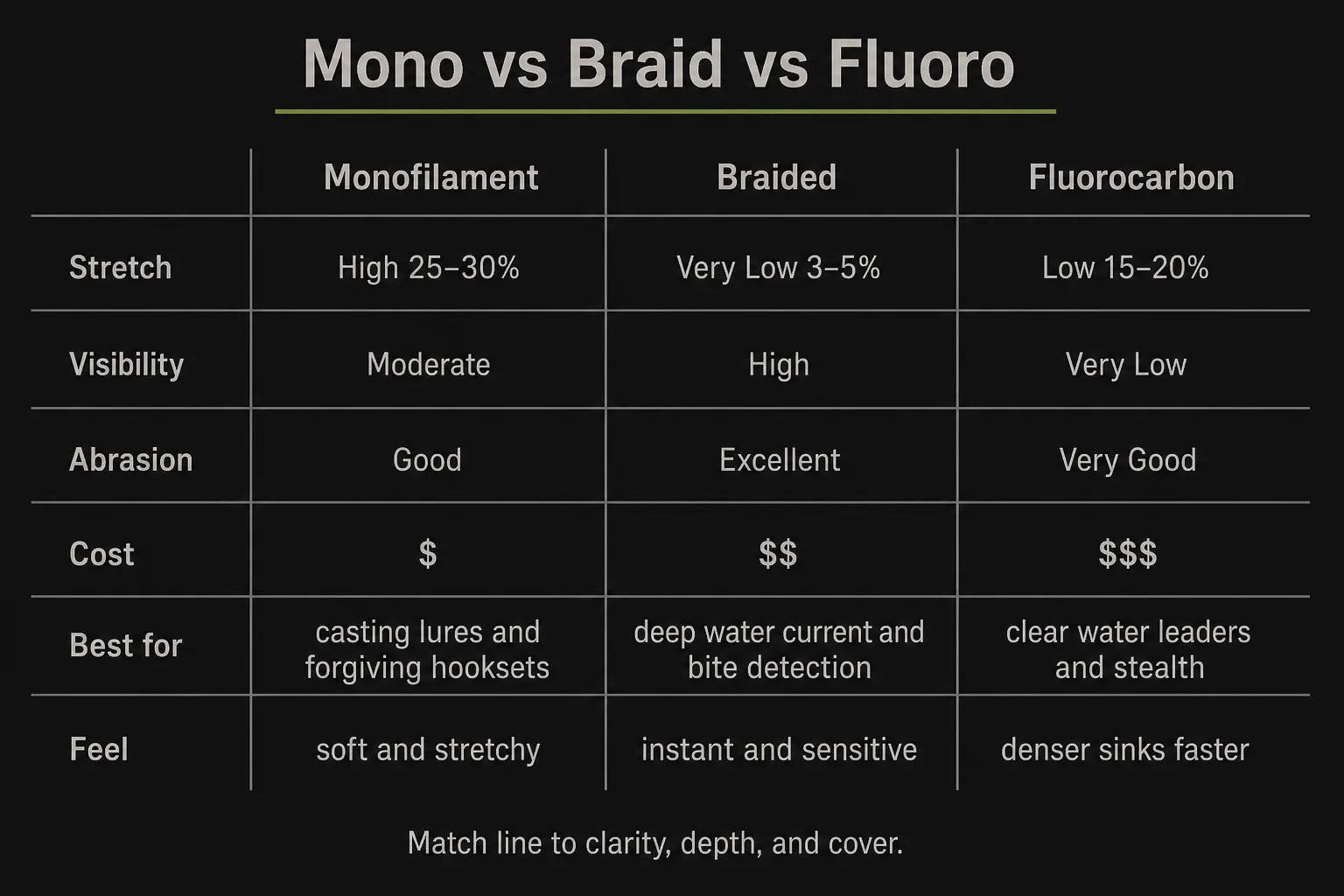
Physical properties matter more than brand marketing. Stretch changes how hard a hookset feels. Diameter changes how your lure tracks in current. Visibility and abrasion resistance decide whether fish ignore your line — or whether rocks and wood cut you off.
| Line Type | Stretch | Visibility | Abrasion Resistance | Cost |
|---|---|---|---|---|
| Monofilament | High (25–30%) | Moderate | Good | $ |
| Braided | Very Low (3–5%) | High | Excellent | $$ |
| Fluorocarbon | Low (15–20%) | Very Low | Very Good | $$$ |
Key Properties That Affect Your Fishing
- Stretch affects hook sets and how well you feel bites
- Visibility matters most in clear, shallow water
- Abrasion resistance decides whether your line survives rocks, wood, and dock edges
- Cost adds up quickly when you are spooling multiple reels
A setup that works for casting spinners in moving water may be wrong for finesse fishing in clear lakes. Match the line to water clarity, depth, current, and the fish you are after — not to whatever is on sale that week.
Monofilament
Mono is still the most forgiving all-around choice. Built-in stretch acts like a shock absorber when a fish shakes its head or surges into cover. That same stretch helps keep hooks pinned during hard runs and makes the line easier to manage in cold weather when braid can feel stiff and wiry.
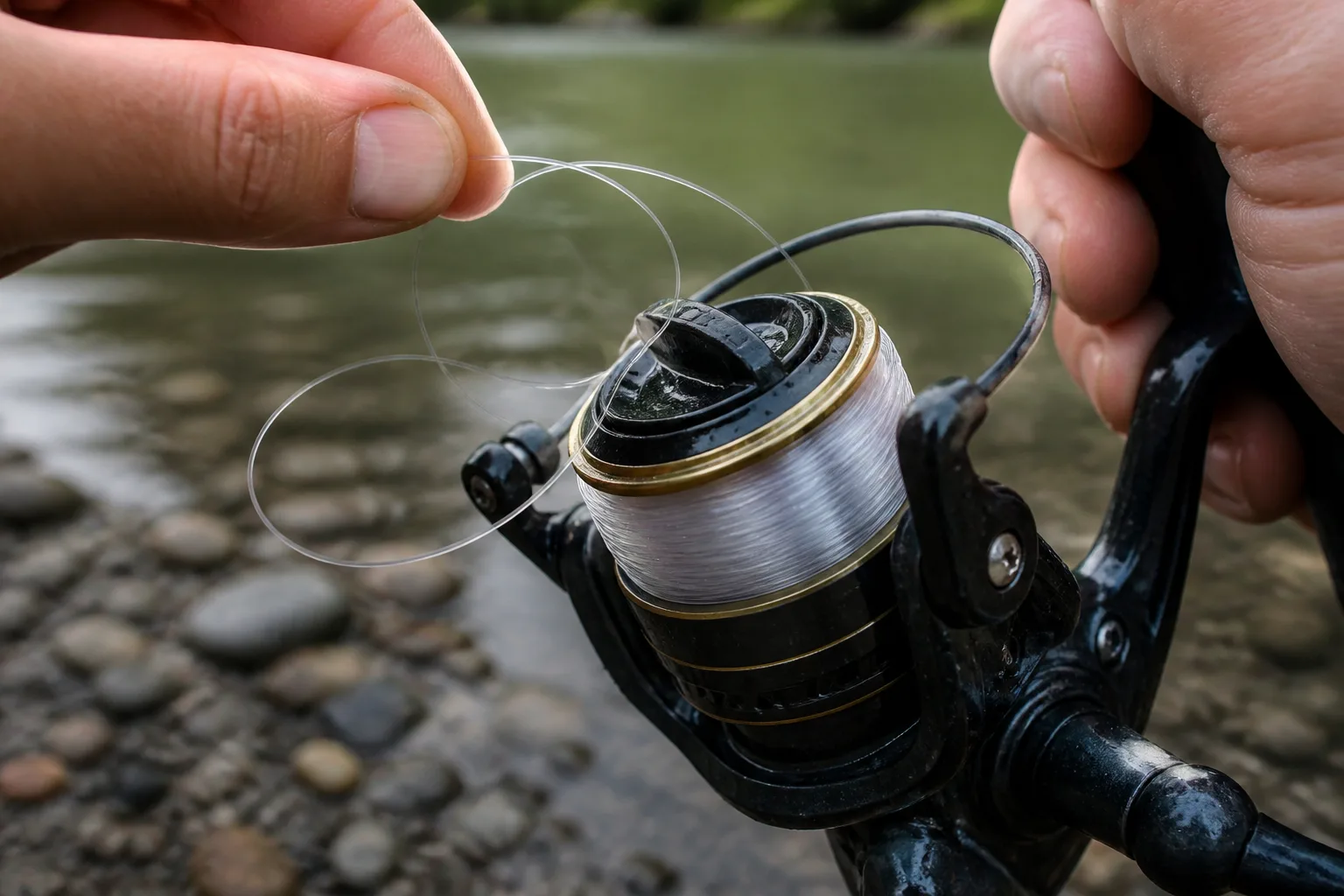
Abrasion resistance matters more than most people think. Rocks, submerged wood, and rough structure will shred weak line quickly. Quality mono holds up well for the price, especially if you check for nicks and retie often.
- Stretch acts as a shock absorber on aggressive strikes and head shakes
- Good abrasion resistance for rocky bottoms and shoreline structure
- Easier to manage in cold water than braid or stiff fluoro
- Budget-friendly for filling multiple reels
- Pairs well with casting lures like inline spinners in moving water
When you are throwing spinners or spoons, mono’s stretch can keep a lure working through the fight instead of ripping free on a hard hookset. It is a strong default if you want one line that covers a lot of situations.
| Pros | Cons |
|---|---|
| Forgiving stretch | More visible than fluoro |
| Good abrasion resistance | Line memory over time |
| Budget friendly | Less sensitivity under load |
| Easy handling in cold water | Thicker diameter for the strength |
Braided Line
Braid is the sensitivity choice. Minimal stretch means you feel ticks, bumps, and light takes that mono would hide — especially in deeper water or when fishing far from the boat. The thin diameter also cuts through current and wind better, so you often need less weight to stay in the strike zone.
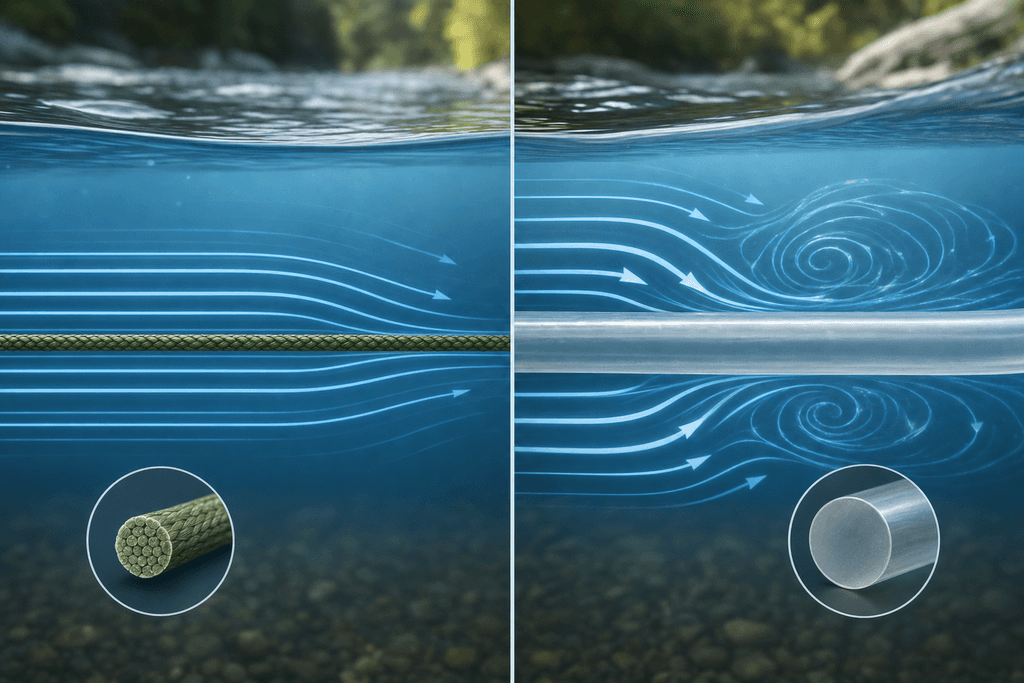
Strength-to-diameter ratio is where braid really shines. You can run heavy breaking strength in a thinner profile than mono, which helps when you need power around cover without a thick, draggy line.
Visibility is the tradeoff. Bright braid is easy for you to track, but fish can see it too in clear water. Most anglers solve that with a monofilament or fluorocarbon leader between the braid and the lure.
- Minimal stretch for instant bite detection
- Thin diameter for casting distance and less drag in current
- High strength for turning fish away from cover
- Usually needs a leader in clear or pressured water
- Best applications: deep water, heavy cover, long casts, and techniques that rely on feel
| Pros | Cons |
|---|---|
| Maximum sensitivity | Highly visible |
| Thin diameter | Often requires a leader |
| Minimal stretch | Can be hard on knots |
| Excellent strength | Higher upfront cost |
Fluorocarbon
Fluorocarbon costs more than mono, but it earns its place in clear water. It bends light closer to the way water does, so it shows up less underwater. It also sinks faster than mono, which helps get a presentation down without adding as much weight.
Quality fluorocarbon usually outlasts mono against abrasion. You can drag it across rock and wood longer before it starts to fail — as long as you still check leaders and retie after hard contact.
Most anglers use fluoro as leader material rather than filling whole spools. Run braid as the mainline for feel and casting distance, then add a few feet of fluorocarbon to the business end. That gives you stealth where it matters without paying to spool an entire reel in fluoro.
- Low visibility underwater compared with mono and braid
- Sinks faster than mono for getting lures deeper
- Strong abrasion resistance around rock and wood
- Less stretch than mono, more than braid
- Best used as leader material for many setups
| Pros | Cons |
|---|---|
| Nearly invisible | Higher cost |
| Fast sinking | Stiffer than mono |
| Great abrasion resistance | Can feel brittle in cold |
| Low stretch | Knot strength is critical |
Matching Line to How You Fish
The right line depends more on how you fish than on a single “best” product. Casting lures in open water often favors mono for stretch and handling. Techniques that rely on feel — bottom contact, deep water, or long drifts — usually favor braid with a leader. Clear, pressured water is where fluorocarbon leaders pay off.
Water clarity changes everything. In stained or muddy water, visibility matters less and you can run heavier or higher-vis line. In clear water, go less visible and consider a longer fluoro leader even if it costs more.
| Technique | Recommended Line | Why |
|---|---|---|
| Casting spinners / spoons | Mono, or braid + leader | Stretch, manageability, and easy casting |
| Bottom contact / drifting | Braid + fluoro leader | Sensitivity with stealth at the lure |
| Heavy cover | Strong braid | Power and thin diameter |
| Clear water | Fluoro leader | Lower visibility near the fish |
You do not need every spool on the wall. Start with quality mono for general fishing. Add braid and fluorocarbon leader material as your techniques expand. Those three cover most situations.
How Line Performs on the Water
Current, depth, and bottom composition expose strengths and weaknesses you will not notice on a calm lake. Thin braid often needs less weight to reach the same depth as thicker mono. Mono’s stretch can help keep a hook in during a hard fight. Fluorocarbon leaders add abrasion resistance and stealth where the line meets structure and fish.
Current, Depth, and Feel
- Braid’s thin diameter reduces drag in current and wind
- Fluorocarbon tends to maintain better sensitivity than soft mono
- Monofilament stretch can help during surging fights
- Line diameter affects lure depth and drift as much as weight does
Abrasion and Real Cost
Rocky bottoms and wood destroy cheap line. Premium fluoro leaders and quality braid usually last longer in abrasive water, which can make them cheaper over a full season even if the spool costs more up front.
| Line Type | Rocky / Woody Water | Softer Bottoms | Season Cost Trend |
|---|---|---|---|
| Budget mono | Wears out quickly | Lasts longer | Higher (frequent replaces) |
| Premium fluoro | Holds up well | Very durable | Moderate |
| Quality braid | Most durable | Longest lasting | Often lowest over a season |
If you fish heavy current with inline spinners — including setups like the SRT 1 oz Inline Spinner — pay attention to nicks after contact with rock. Retie often. The best line still fails at a worn knot or a frayed section near the lure.
Line Sizes by Species
Pound test is a starting point, not a hard rule. Cover, current, and water clarity can push you heavier or lighter. Use these common ranges as a baseline, then adjust for where you are fishing.
| Species | Typical Mainline | Leader (if used) | Notes |
|---|---|---|---|
| Trout / panfish | 4–8 lb mono or light braid | 4–6 lb fluoro or mono | Stay light in clear water; step up around rock and wood |
| Bass | 10–15 lb mono, or 30–50 lb braid | 10–15 lb fluoro | Heavier braid around heavy cover; lighter for open water |
| Walleye | 8–12 lb mono or braid | 8–10 lb fluoro | Sensitivity matters; fluoro leaders help in clear lakes |
| Steelhead | 10–15 lb mono or braid | 8–12 lb fluoro or mono | Balance abrasion resistance with a presentation fish will take |
| Salmon (Chinook / coho) | 20–30 lb braid, or 15–25 lb mono | 15–25 lb mono or fluoro | River current and big fish favor stronger setups; see Sacramento Chinook gear notes |
| Catfish / carp | 15–30 lb mono or braid | Optional mono leader | Abrasion resistance around snags matters more than stealth |
| Inshore saltwater | 15–30 lb braid | 20–40 lb fluoro | Match leader to structure — docks, oyster, and rock chew line up |
For river Chinook around the capital stretch, a practical spinner setup is 20–30 lb braid with a 15–25 lb leader. More detail on access, season timing, and gear is in our Sacramento salmon fishing guide.
Building a Simple Line Setup
You can cover most fishing with two systems: a quality monofilament setup for casting and general use, and a braid-plus-leader setup for sensitivity and clear water. Match pound test to fish size and the structure around you — not to the heaviest spool in the store.
- Start with quality monofilament as your foundation
- Add braid with fluoro or mono leaders as techniques expand
- Match line strength to fish size and cover
- Replace damaged sections and refresh mono that has sat in UV
Line choice affects how your lure runs, how clearly you feel a take, and whether a hookset holds. Getting the basics right is one of the simplest upgrades you can make.
Common Questions About Fishing Line
What pound test should I use?
Match strength to fish size and cover. Lighter freshwater fish often fish well on 4–12 lb test. Larger fish, heavy current, or thick cover usually call for 15–25 lb or more. See the line sizes by species table above for common starting ranges.
How often should I replace my fishing line?
Replace monofilament at least once per season if you fish regularly. Mono breaks down from UV exposure even when it sits unused, so last year’s garage spool is risky. Braid lasts longer but should still be checked for fraying and replaced every couple of seasons, or sooner if it looks worn.
Can I use saltwater line in freshwater?
Yes. Saltwater line is built for harsh conditions and often has strong abrasion resistance, which helps around rocks and docks. Just match the pound test to the fish and water you are fishing.
What line color is best?
Clear or low-visibility green is a safe default in clear water. High-vis braid helps you track your line, especially if you use a clear leader at the lure. In stained water, color matters less than strength and abrasion resistance.
When should I use a leader?
Use a fluorocarbon or mono leader when fishing clear water, pressured fish, or visible braid mainline. Straight line is fine in stained or faster water where stealth matters less. A leader also gives you an intentional break point, so a snag is less likely to dump your whole spool.
How do I prevent line twist when using spinners?
Add a quality ball-bearing swivel above the spinner to stop twist before it builds. Balanced inline spinners help, but a swivel still earns its place. If line is already twisted, let it trail in current or behind a slow-moving boat so it can unwind.