
Silver Run Tackle
Inline Spinners for Salmon in Heavy Current
How to fish heavy inline spinners for river Chinook — weight, blade control, retrieve, and why light hardware fails in current.
When a chinook slams your spinner in fast water, it's because the blade's vibration and flash triggered an instinct the fish can't ignore. Spin spinners work better than most lures in heavy Pacific Northwest currents because they stay deep and keep moving even when the river wants to push everything downstream. Understanding how these lures actually work will put more salmon on the bank this season.
Table of Contents
- What Makes Spin Spinners Different
- Choosing the Right Spin Spinner for River Conditions
- Techniques for Fishing Spin Spinners in Heavy Current
- Common Mistakes That Cost You Fish
- Why Weight and Blade Design Matter More Than You Think
- Putting It All Together on the Water
- Spin Spinner Questions Answered
What Makes Spin Spinners Different
Salmon have been chasing spinning metal through Pacific Northwest rivers for over a century, and there's a simple reason why. Spin spinners create a combination of flash and vibration that triggers something deep in a salmon's brain, making them strike even when they're not actively feeding. The design is straightforward but deadly effective: a metal blade spins around a weighted body as it moves through water, creating an underwater light show that salmon can detect from surprising distances. Unlike spoons or plugs that wobble, or soft plastics that just drift along, spin spinners generate constant motion and vibration that works in almost any current speed.
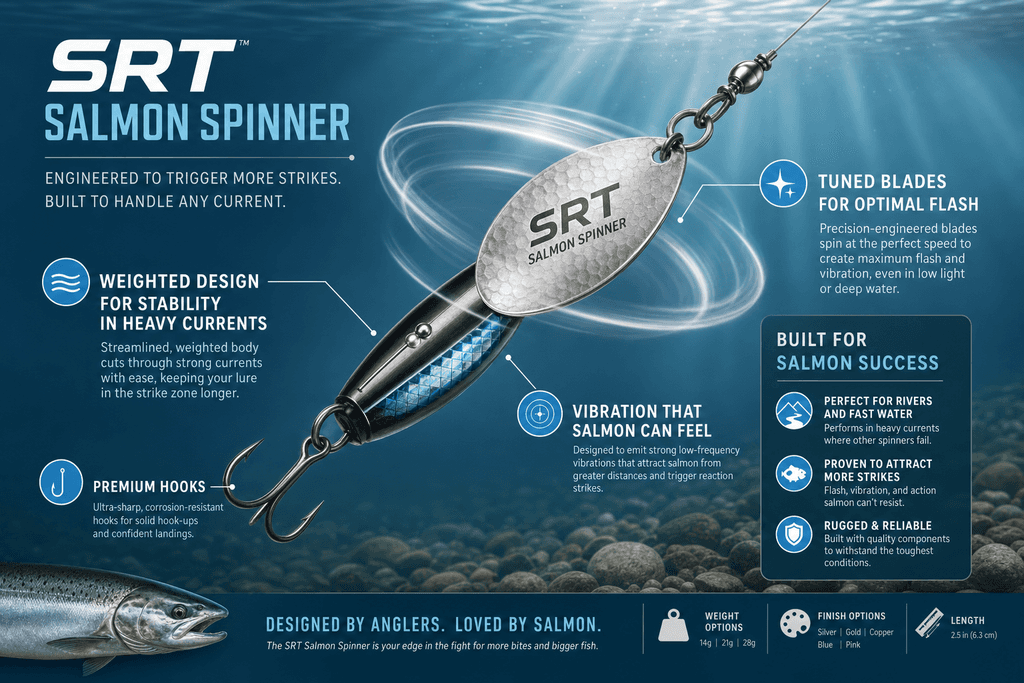
The magic happens when water hits that spinning blade. As the blade rotates, it reflects light in quick flashes while pushing water in rhythmic pulses. Salmon pick up on both signals through their lateral line and vision, which is why these lures work even in murky water or low light conditions.
How the Mechanics Work
The inline spinner design puts everything in a straight line, which is different from safety pin style spinnerbaits you might see bass fishermen using. This straight setup means the lure cuts through current better and gets down to where salmon hold. The blade sits on a wire shaft that runs through the body, and as water flows past, the blade spins freely around that center wire.
Here's what controls how a spin spinner performs:
- Body weight determines how deep the spinner runs and how well it fights current
- Blade size and shape control the spin speed and amount of flash produced
- Wire thickness affects durability when fighting big fish in rocky rivers
- Hook size needs to match the overall lure size for proper balance
The SRT Salmon Spinner uses a 1 oz body weight specifically because that's the sweet spot for heavy current rivers where salmon run. Too light and you're fishing near the surface where salmon rarely cruise. Too heavy and the blade won't spin right.
Comparing Spinner Types
Not all spin spinners are built the same, and knowing the differences helps you pick the right tool for your fishing situation. Weight and blade configuration make huge differences in where and how you can fish them effectively.
| Spinner Type | Weight Range | Best Water Conditions | Target Depth |
|---|---|---|---|
| Light Inline | 1/8 - 1/4 oz | Slow creeks, ponds | 0-3 feet |
| Medium Inline | 1/4 - 1/2 oz | Moderate rivers | 2-6 feet |
| Heavy Inline | 3/4 - 1 oz | Fast rivers, heavy current | 4-12 feet |
| Spinnerbait | 1/4 - 3/4 oz | Lakes, slow water | Variable |
Pacific Northwest rivers where salmon run typically have strong currents and deeper holes, which is why heavier spin spinners dominate out here. According to experienced anglers who've tested various lure types, spinners consistently produce when other lures fail because of their unique action.
Why Salmon Can't Resist Them
Salmon aren't really feeding when they enter rivers to spawn, but they still strike lures out of aggression or instinct. Spin spinners tap into both triggers at once. The flashing blade mimics a small fish invading their territory, while the vibration pattern resembles injured prey that's easy to catch.
The key factors that make spin spinners so effective include:
- Constant blade rotation creates non-stop visual and vibration signals
- Flash pattern changes as the spinner moves through different current speeds
- Vibration frequency matches the range salmon are most sensitive to
The combination of weight, blade design, and rotation speed determines whether a spinner just drifts through a run or actually triggers strikes. That's why hand-assembled spinners with tuned blades, like what we build at Silver Run Tackle, perform differently than mass-produced versions where quality control varies.
Choosing the Right Spin Spinner for River Conditions
Most salmon anglers lose fish before they even make their first cast, and it usually comes down to picking the wrong spinner for the conditions. When you're standing on the banks of a Pacific Northwest river watching the current rip past, the spinner in your tackle box needs to match what the water is throwing at you. The weight, blade size, and color of your spin spinners all play different roles in whether salmon even notice your presentation. Getting these elements right means the difference between a productive day and wondering why everyone else is hooking up while you're just getting exercise.
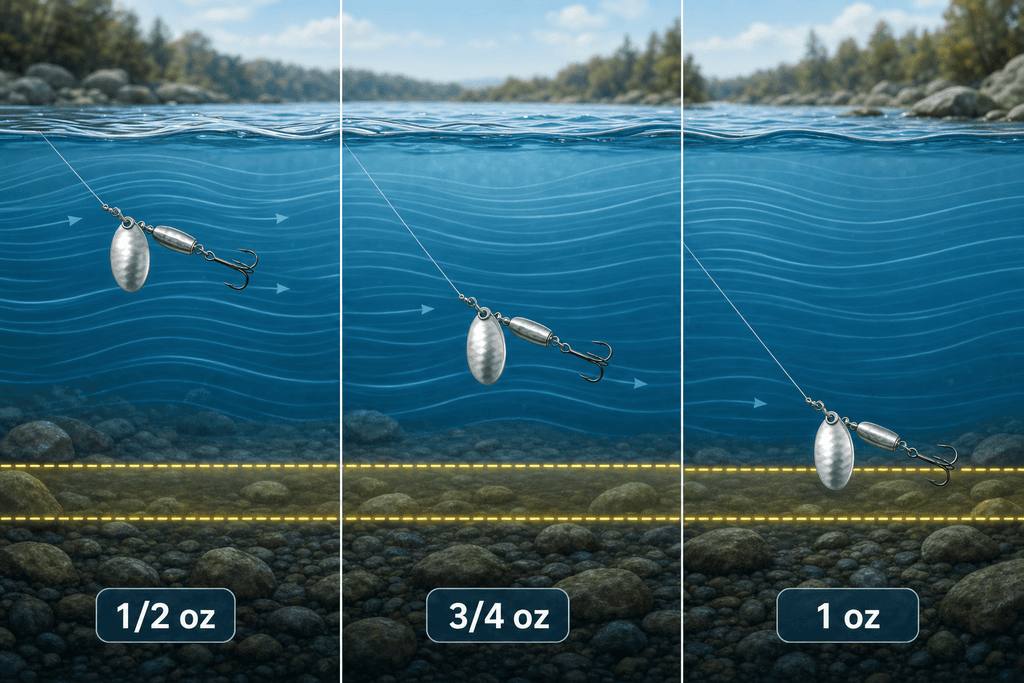
Weight is the foundation of everything else. In heavy current, lighter spinners just tumble and twist instead of swimming through the strike zone where salmon are holding. A 1 oz spinner cuts through the flow and maintains proper blade rotation even when the river is pushing hard.
| Current Speed | Water Depth | Recommended Weight |
|---|---|---|
| Slow (under 2 mph) | 2-4 feet | 1/4 - 1/2 oz |
| Moderate (2-4 mph) | 4-6 feet | 1/2 - 3/4 oz |
| Heavy (over 4 mph) | 6+ feet | 1 oz |
Blade size affects how your spinner moves through the water. Larger blades create more vibration and flash, but they also need more water pressure to spin correctly. The SRT Salmon Spinner uses tuned blades engineered specifically for the kind of heavy flows you find in rivers like the Columbia, Cowlitz, and Skagit.
Color selection depends on what the salmon can actually see. In clear water with bright conditions, silver and gold patterns work because they mimic baitfish. When the water gets stained or murky, chartreuse and orange become visible from farther away. Some anglers overthink this part, but salmon respond to contrast more than specific colors.
- Clear water: Silver, gold, or natural patterns
- Stained water: Chartreuse, orange, or bright combinations
- Low light: Darker colors with metallic flash
- Bright sun: Subdued patterns that don't spook fish
Different salmon species also respond to different spinner sizes. Chinook in deep holes need the weight and profile of a full 1 oz spinner, while coho in shallower runs might hit smaller presentations. The key is matching your tackle to both the fish and the water they're holding in.
Techniques for Fishing Spin Spinners in Heavy Current
The way you present a spinner matters more than the spinner itself, which is something most anglers figure out after burning through a few fishless seasons. Heavy current changes how salmon see and react to your offering, so the techniques that work in calm water will leave you skunked on a ripping river. Upstream casting gives you the most natural presentation because your spinner swings through the strike zone at the same speed as drifting food. Downstream casts can work in specific situations, but they often move too fast and pull your spinner out of the zone before salmon can commit.
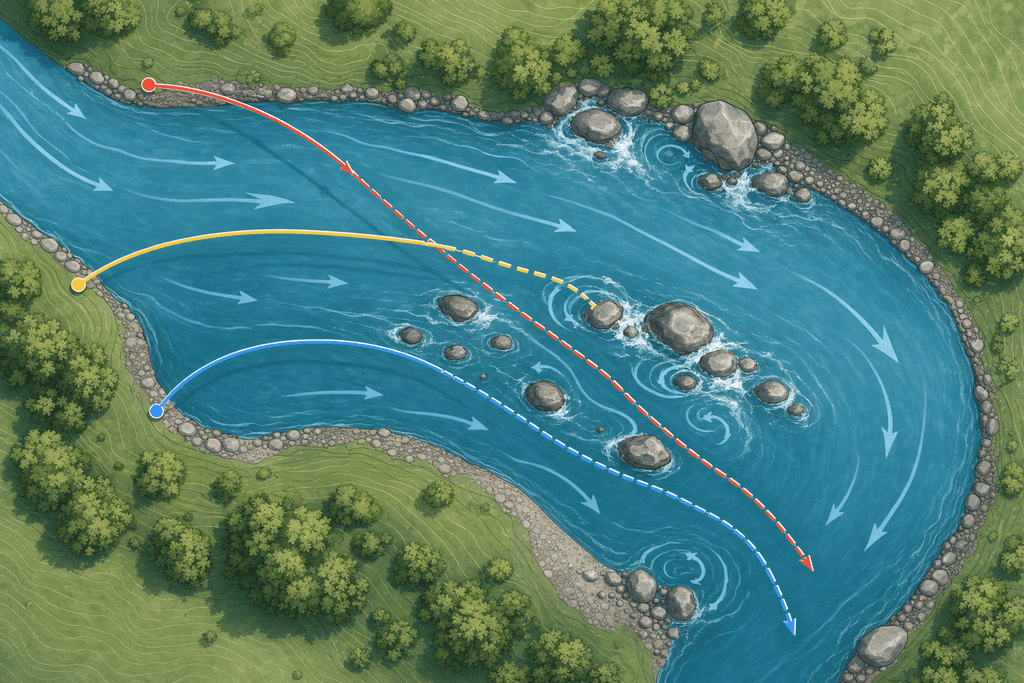
Your retrieve speed needs to keep the blade spinning without racing past holding fish. Too slow and the blade stops rotating, too fast and salmon won't chase it. Finding the right retrieve cadence takes practice, but you should feel a steady vibration through your rod tip when the blade is working correctly.
- Cast at a 45-degree angle upstream
- Let the spinner sink while keeping your line tight
- Start your retrieve as the current catches the line
- Maintain steady pressure to keep the blade rotating
- Let the spinner swing through the zone below you
- Repeat with each cast covering new water
Reading water tells you where to put your casts. Salmon hold in spots where they can rest without fighting current, which usually means seams, pockets behind rocks, and deeper slots. The current breaks in these areas create ambush points where fish wait for food to drift past.
Keeping your spinner in the strike zone longer requires understanding how current speed changes at different depths. The water moves slower near the bottom, so your spinner naturally slows down as it sinks. This is exactly where salmon are sitting, which is why spin fishing techniques can be incredibly effective when done right.
- Target the seam between fast and slow current
- Work deeper pockets methodically before moving
- Adjust your angle to extend the swing time
- Use current to your advantage instead of fighting it
Common Mistakes That Cost You Fish
Even experienced anglers make the same errors over and over, mostly because they don't realize what's actually happening below the surface. The most common problem is retrieve speed that doesn't match the current conditions. When you reel too fast, the blade spins but your spinner races past salmon before they can react. Reel too slow and the blade stops working entirely, turning your spinner into an expensive weight that drifts along doing nothing. The sweet spot sits right in the middle, where you feel that steady thump-thump-thump through your rod.
Using spinners that are too light for the current is like trying to drive a compact car through a flood. The water just pushes it around and you lose all control over where it goes. Our SRT Salmon Spinner at 1 oz handles the kind of heavy flows that lighter options can't manage, keeping your presentation where it needs to be instead of tumbling uselessly downstream.
- Check blade rotation every few casts
- Match spinner weight to actual current speed
- Keep your line tight to feel what's happening
- Adjust retrieve speed when conditions change
- Don't set the hook on every bump or snag
Poor line management in heavy flows creates slack that hides strikes and prevents good hooksets. When your line bellies out in the current, you can't feel what your spinner is doing or when a salmon hits it. Mending your line and keeping a direct connection to your spinner solves this problem.
Missing the strike zone happens when anglers don't adjust their presentation to match where fish are actually holding. Salmon aren't spread evenly across the river; they're stacked in specific spots based on current, depth, and structure. Casting randomly instead of targeting these areas wastes time and effort.
Water conditions change throughout the day as flows increase or decrease, light shifts, and temperature fluctuates. What worked at dawn might not work at noon, but most anglers keep doing the same thing expecting different results. Pay attention to what's changing around you and adjust your approach accordingly.
Why Weight and Blade Design Matter More Than You Think
A spinner that works perfectly in calm water can become completely useless in a fast-moving river. The physics behind how spin spinners perform in current is more complex than most anglers realize. When water rushes past your lure at different speeds, the relationship between weight, blade size, and rotation speed determines whether your spinner stays in the strike zone or gets pushed around like a leaf. Understanding these mechanics separates anglers who catch fish from those who just cast and hope.
How Current Affects Spinner Depth
The speed of river current creates upward pressure on your spinner blade. This lift force works against the weight of your lure, and the balance between these two forces controls your presentation depth. In Pacific Northwest rivers where salmon hold, current speeds can vary dramatically from one pool to the next.
- Slow current (under 2 mph) allows lighter spinners to sink and stay deep
- Moderate current (2-4 mph) requires precise weight-to-blade ratios for optimal depth
- Fast current (over 4 mph) demands heavier weights to maintain bottom contact
- Turbulent water creates unpredictable lift patterns that affect lure action
Weight and Blade Rotation Relationship
The weight of your spinner does more than just sink the lure. It provides the stability needed for consistent blade rotation, which is what actually attracts salmon. Too light and the blade spins erratically or stops altogether in heavy current. Too heavy and the blade won't start spinning until you retrieve faster than natural.
- Heavier spinners start rotating at slower retrieve speeds in current
- Proper weight distribution keeps the blade spinning at consistent angles
- Balance between body weight and blade size affects flash patterns
Hand Tuned Versus Mass Produced Blades
Mass-produced spinners from larger manufacturers often have blades that are stamped out quickly without individual attention to balance. Hand-tuned blades perform differently because each one gets adjusted for optimal rotation at specific retrieve speeds. The SRT Salmon Spinner uses hand-assembled components in small batches, which means each blade gets checked for proper cupping and balance before it goes on the wire.
This attention to detail matters when you're fishing rivers with unpredictable current. A blade that's even slightly off-balance will wobble or stop spinning when water speed changes. You can learn more about advanced spinner fishing techniques that take advantage of properly tuned lures.
| Spinner Type | Blade Start | Depth in Strong Current | Rotation Consistency |
|---|---|---|---|
| 1 oz Hand-Tuned | Starts easily | Stays deeper | Very consistent |
| 3/4 oz Mass-Produced | Needs more speed | Runs shallower | Less consistent |
| 1/2 oz Standard | Needs the most speed | Rides highest | Often inconsistent |
Real World River Performance
Different river conditions expose the weaknesses in poorly designed spinners. In shallow riffles with fast water, lighter spinners get pushed to the surface where salmon rarely strike. In deep pools with moderate current, the wrong weight-to-blade ratio means your lure either drags bottom or rides too high.
- Shallow fast water needs weight to punch through surface turbulence
- Deep slow pools require balanced designs that sink without excessive speed
- Transition zones between currents demand stable blade rotation
- Pocket water behind rocks needs quick-starting blades
Putting It All Together on the Water
Spin spinners work because they cover the basics that matter most in Pacific Northwest rivers. You need the right weight to match your current speed, which usually means going heavier than you think. The presentation has to look natural, and that means keeping your spinner near the bottom where salmon actually hold. Most anglers who struggle with spin spinners are either using a spinner that's too light or fishing too fast through their drift.
The key things to remember are pretty simple. Match your spinner weight to the current you're fishing, keep it in the strike zone, and let the blade do the work. A 1 oz spinner like the SRT Salmon Spinner handles most river conditions in the Northwest without needing constant adjustments. That weight gets down fast and stays there even when the current picks up.
Your casting angle and retrieve speed matter more than most people realize. Quarter your casts upstream and let the current do most of the work. The spinner should tick bottom every few seconds if you're in the right zone.
Once you get the feel for how spin spinners move through different water types, you'll start reading rivers differently. You'll notice the seams and pockets where salmon rest, and you'll know exactly how to present your spinner to them. That's when things start to click and your catch rate goes up.
Spin Spinner Questions Answered
Most anglers have similar questions when they start fishing spin spinners for salmon, especially in the fast-moving rivers of the Pacific Northwest. Getting the right answers can mean the difference between a frustrating day on the water and landing that trophy fish. These are the questions we hear most often from both beginners and experienced anglers looking to improve their spinner fishing game.
What weight spinner works best in heavy current?
A 1 oz spinner is your best bet for rivers with strong current. Lighter spinners will ride too high in the water column and won't get down to where the salmon are holding. The SRT Salmon Spinner was designed specifically at this weight to handle the challenging conditions found in Pacific Northwest rivers while staying in the strike zone.
How fast should I retrieve a spin spinner?
Your retrieve speed should be just fast enough to keep the blade rotating consistently. In heavy current, you might barely need to reel at all since the water flow does most of the work. The key is maintaining that steady flash and pulse that triggers strikes from salmon.
Do spin spinners work in low, clear water?
Spin spinners can be effective in clear water, but you'll want to adjust your approach. Use more natural colors like silver or gold instead of bright patterns, and fish them during low-light periods like early morning or evening. The flash from the blade still attracts fish without spooking them in gin-clear conditions.
What's the best color for Pacific Northwest rivers?
Silver and chartreuse combinations work well in most conditions throughout the Pacific Northwest. When water is stained or murky, brighter colors like pink or orange can help salmon locate your spinner. Match your color choice to water clarity rather than sticking with just one pattern all season.
How do I know if my blade is rotating properly?
You should feel a steady vibration through your rod tip when the blade is spinning correctly. If you don't feel anything or the vibration is inconsistent, your blade might be damaged or you're retrieving too slowly. A properly tuned blade will start rotating immediately when it hits the water.
Can I fish spin spinners from the bank?
Bank fishing with spin spinners is absolutely possible and often very productive. Cast upstream or across the current and let the spinner swing through likely holding areas. Focus on seams, tailouts, and deeper runs where salmon rest during their upstream migration.